
Hope and Change
I guess this is a Fourth of July post?

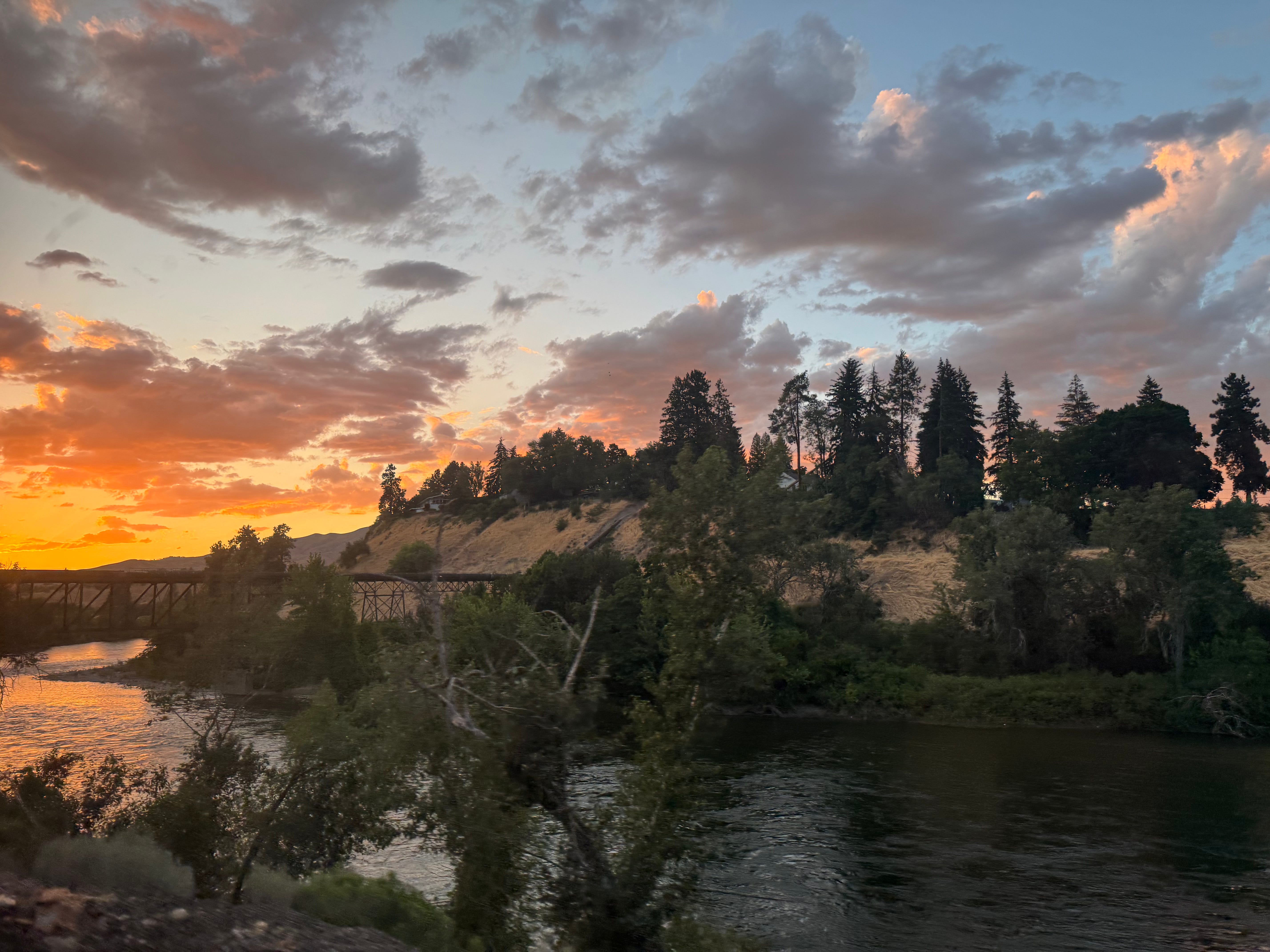
The Empire Builder leaves Seattle to the north – up the lip of Puget Sound to Edmonds and Everett before turning east to climb the Western flank of the Cascades for the overnight journey to Spokane. On a gossamer summer evening in June – Father’s Day, the Solstice – the water sparkles. Herons perch at the shore, as unbothered by the Iron Horse as they are by the paddleboarders in the surf.
We pass through the traditional lands of the Snoqualmie as we head towards Stevens Pass. The tracks are lined with foxglove, something the onboard interpretive guide points out is the source of digitalis, a key element in heart medicine.
We cross the glittering Skykomish River into teeny Index, Washington, and a woman wearing bright pink gloves waves two-handed, Michelle Obama style, as the train passes, following the river’s south fork. Out the window Mount Baring looms, its slopes deadened by acres of brown scrub and trees that burned in the Bolt Creek Fire of 2022. They’re probably never coming back, says the guide.
The loss is breathtaking – but so is what remains. The river, the mountains, the foxglove, the miles upon miles of trees still standing. Douglas Fir, Western Cedar, and Western Hemlock plus big leaf maple, cottonwood and red alder. Crossing the country by train it’s hard to conjure thoughts grand enough to match the scope of the terrain – the mountains majestic, the fruited plains. But I try. I remember that while so much of the towering old-growth of the North Cascades was lost to clear-cutting in the 19th and 20th century, decades of environmental activism and grinding legislative gains led to the passage of the Northwest Forest Plan in 1994, without which the mountains would be far-more denuded.
Forest preservation is a long game, and again imperiled by — well, you know. But the wins are worth celebrating. As the North Cascades Conservation Council points out, “Since trees tend to grow quickly in the North Cascades, some low elevation valley areas have now grown back with naturally regenerated, mature second growth forests which are well on their way to becoming old growth.”
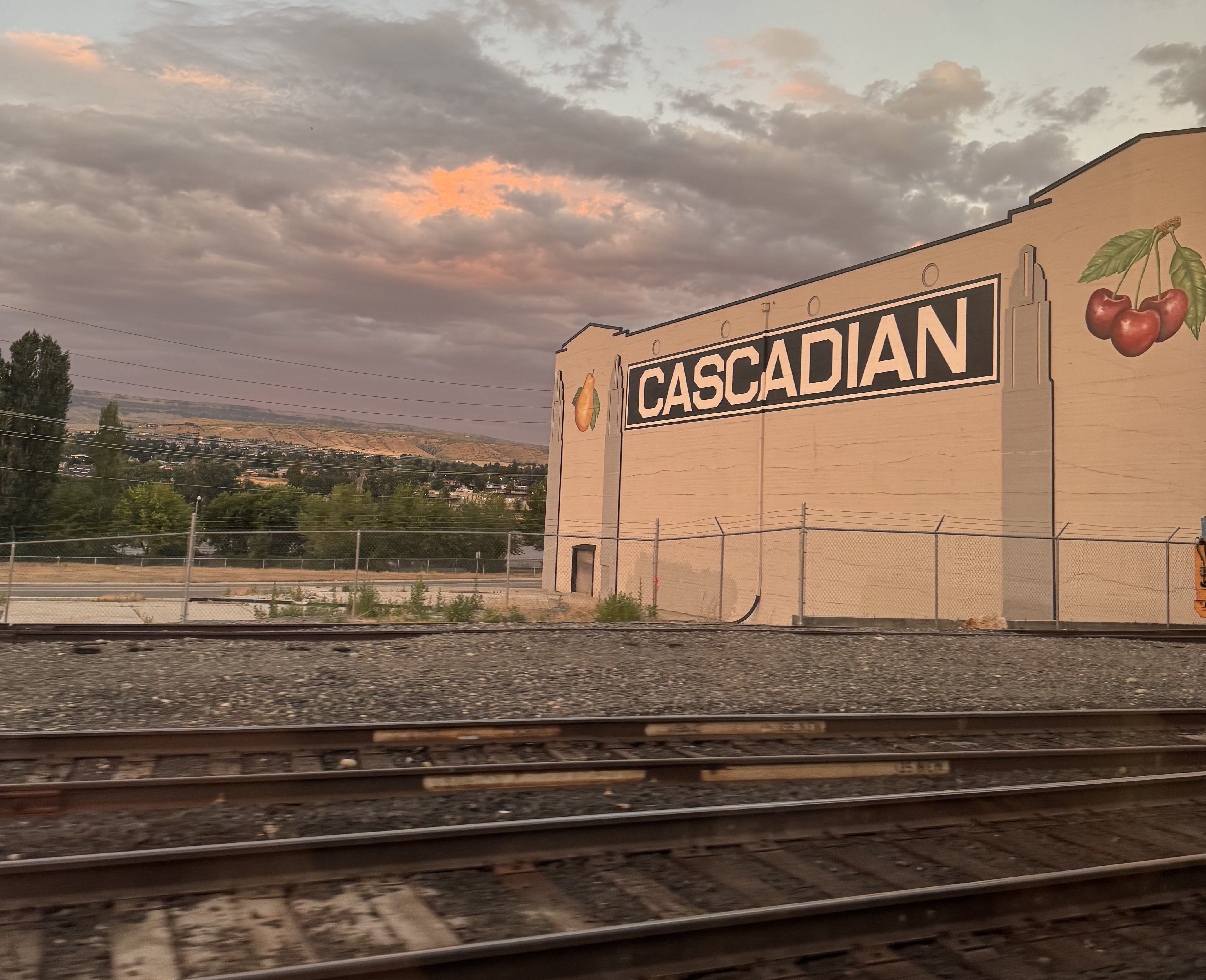
Heading home from Seattle to Chicago I spent two days by myself in a roomette and savored every minute, as I felt the full breadth of the 2,200 miles unspool out the window. Leaving my family in Seattle is always painful, but marking the real distance between the two homes that pull me in opposite directions helped knit a stronger tether between them.
I have been in kind of a funk, stupefied by the isolation of remote work and the forces of fascism, greed, and stupidity dead set on destroying everything I love about my life in this country. I know I’m not alone here. Taking the train helped me gain a little perspective how much damage has been done but also how much good remains especially, news flash, if the lack of wifi forces you to talk to your dinner companions and the sleeping car attendant, or just spend a whole lot of time staring out the window.
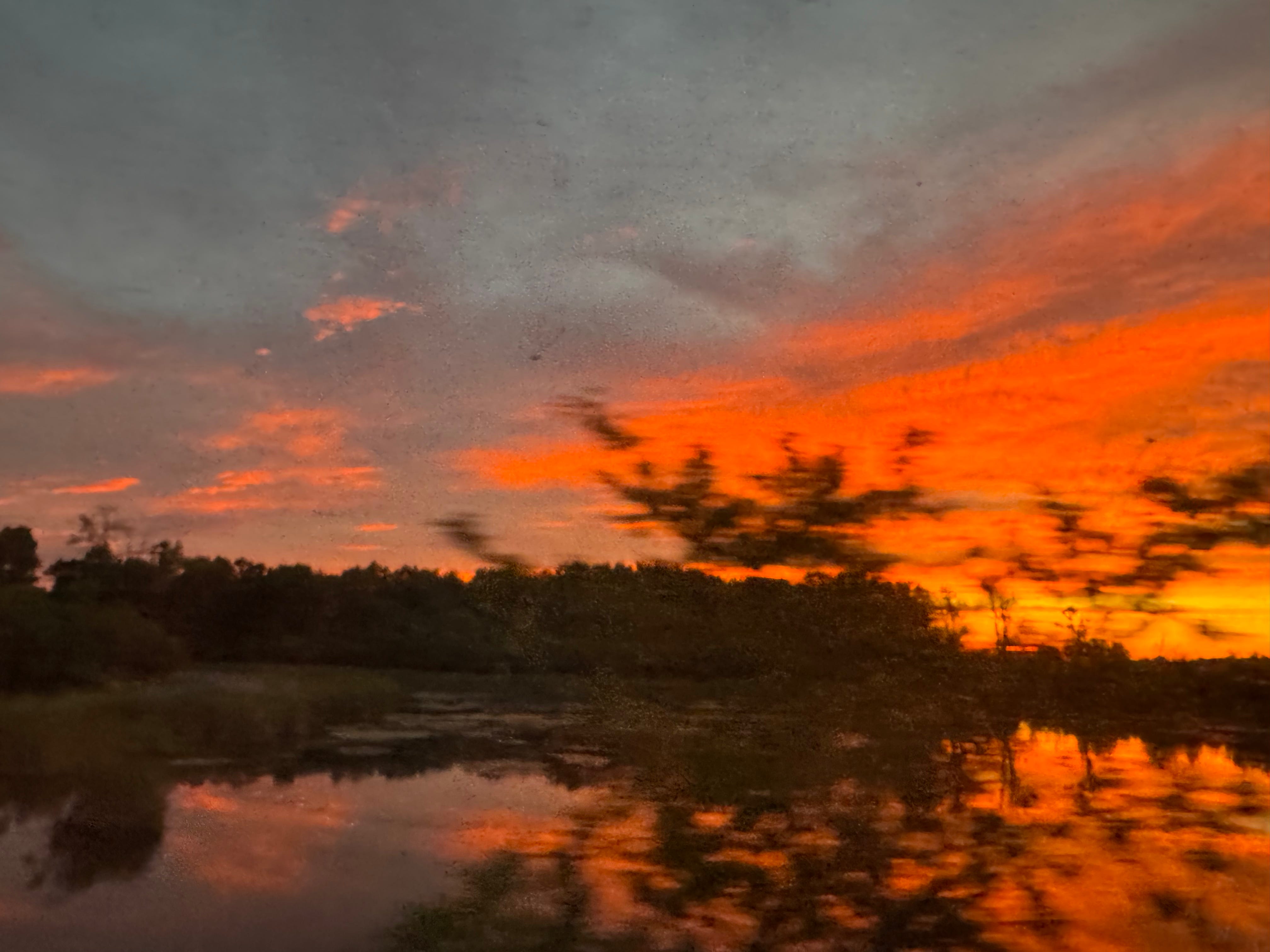
On the Empire Builder I shared space with retirees and newlyweds, a father and son on a directionless amble across the country and a solo traveler heading home from visiting her daughter. Black, white, old, young, screen-addled and Amish—they’re all coexisting on the train, and I felt real if fleeting kinship. I watched the endless expanse of Montana unroll into the twilight, and saw the sun rise over North Dakota, blazing orange. It’s so beautiful, this wicked, crippled country with so much potential for restoration and repair. I remembered that I loved it.
In the past few weeks, as an experiment, I’ve been making an effort to appreciate things that seem to make other people happy on a sweeping scale.
I got into the Knicks, of course, and scream-watched their victory with my brother-in-law and my cousin one night. And I’ve been watching the World Cup, which had taken over Seattle while I was there and whose brotherly sprit of international sports excellence I can’t help but find thrilling, even though FIFA is the worst.
I am a basic bitch right now, in other words, and you know what? It’s working. Collective catharsis is a hell of a drug!
While I was in Seattle I took vicarious pleasure in another mass catharsis: the opening of the Obama Presidential Center back home in Chicago. The OPC has been the focus of ongoing controversy and drama since early plans were first announced, and neighborhood fears about the gentrifying impact of the museum campus on the surrounding community are well founded; just ask anyone who’s tried to find a place to live in Woodlawn lately. The OPC’s reluctance to enter into a Community Benefits Agreement that would help mitigate against rising rents in the area remains an ugly sore on the shiny new complex. But, as this South Side Weekly piece on the OPC’s opening weekend notes:
“Housing costs in Woodlawn and South Shore, communities abutting the center, are on the rise; concerns about displacement are not abating. But as the OPC opens, there are also positive expectations about the museum. As [Chicago artist] Dorian Sylvain observed, “There is big love for Obama. There is also a neighborhood floundering, so to have these grounds for the neighborhood really means a lot.”
“While I’m not sure I’d call the site of the OPC “floundering” -- at 59th and Stony Island it’s practically an extension of the University of Chicago campus – I can affirm that the community SHOWED UP for the opening weekend. I loved seeing so many Chicago artists and friends engaged in the celebration: friends in Mucca Pazza (who played at my wedding) performed; my Horton teacher William Gill led a troupe of dancers clad in Nick Cave’s stunning Sound Suits; the whole neighborhood danced to Stevie Wonder on the Midway. It all seemed entirely of Chicago and I loved it. I want to believe — like Mamdami — that there’s civic value in loudly asserting the possibility of an alternative timeline. Watching all the hoohaa – in such stark contrast to the barren wasteland of Trump’s slapdash fair in DC -- makes me remember the thrill of being in Grant Park when he won, and reignited my belief in the possibility of change after a winter drowning in cynicism and despair. Bring on the hopey changey, even just for one day.
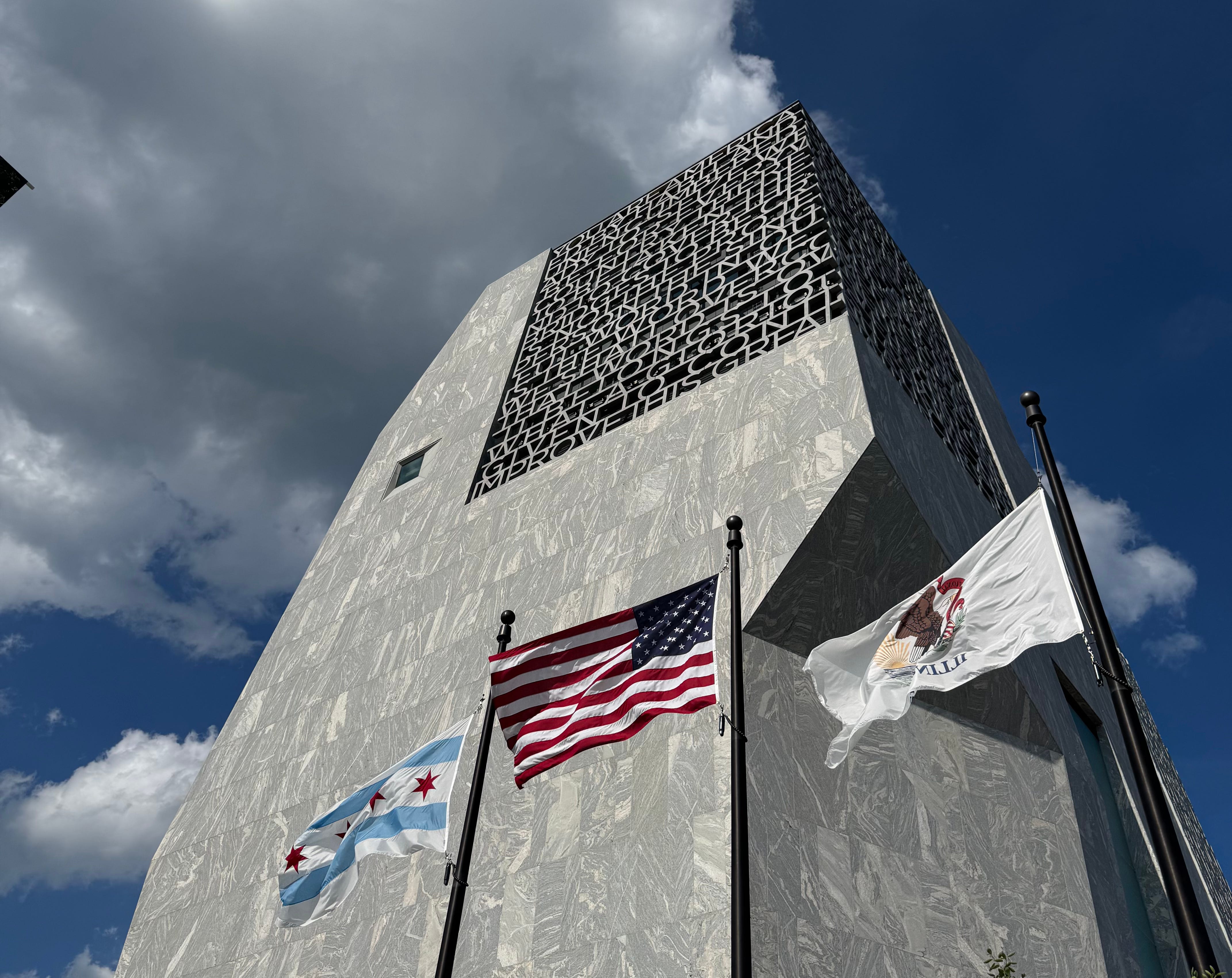
Now that I’m home, I went to visit the OPC in person the other day. Weaving through the crowd of people lined up on the plaza to take photos with the bronze figures of Barack and Michelle, I ducked inside the tower dubbed “the Obamalisk,” which I found to be surprisingly inviting up close. The patterned granite facing gives it a softness that doesn’t come through in photos. Tickets to the museum are sold out through October, but the grounds are open, as is the lower level of the museum, site of the café and the gift shop.
It was 4:30, a half hour before closing, and the line to get into the shop was long. But after 20 minutes I was waved through the open door. Crowds clustered around displays of t-shirts and coffee mugs, but I made a beeline for the corner where I found the object of my desire: my book.
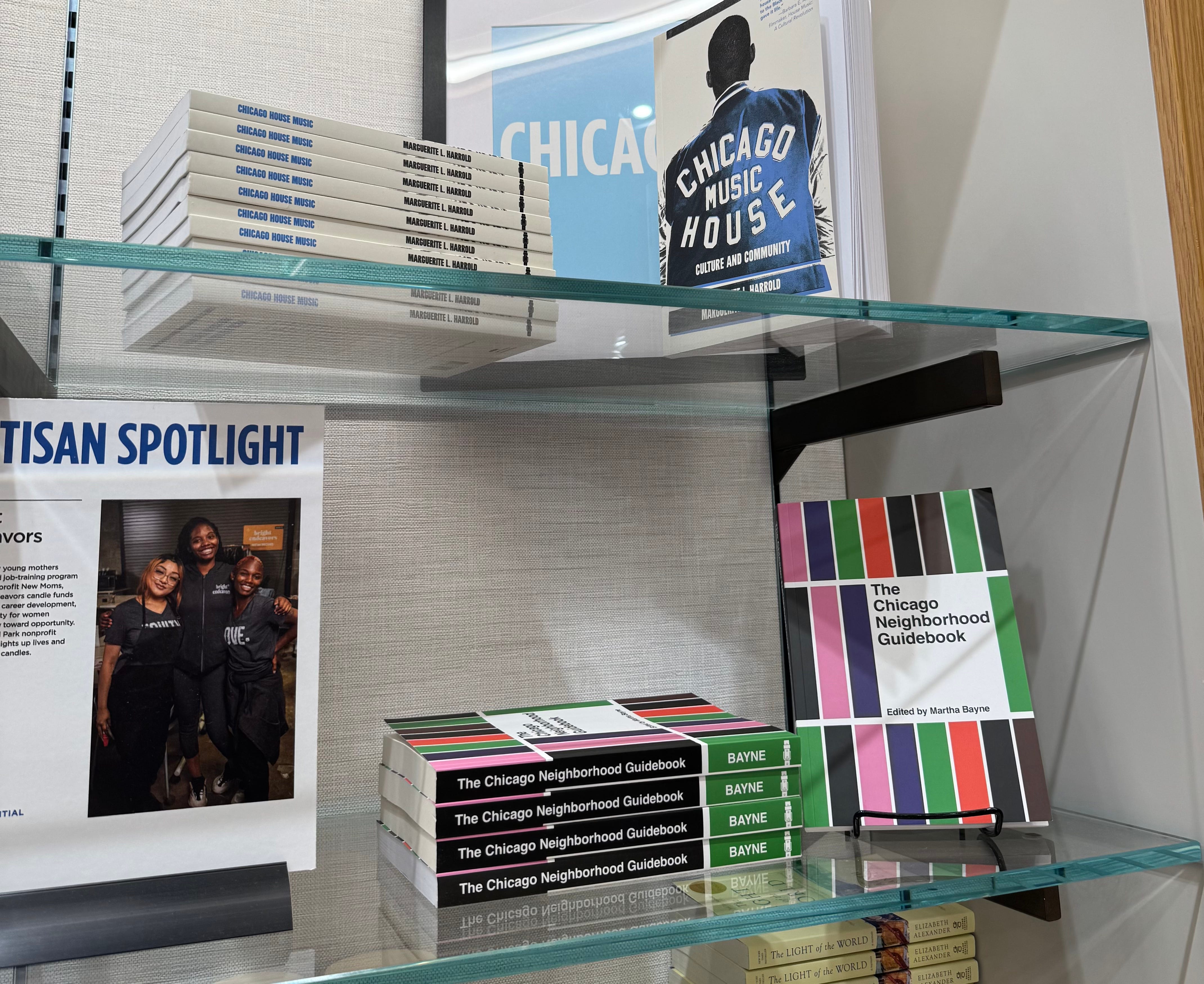
I’d been told by friends that copies of my 2019 Chicago Neighborhood Guidebook had been spotted on display in the shop, but this was the first time I saw it for myself. It was emotional! The CNG is a collection of essays by local writers on Chicago neighborhoods, part of a series published by Belt (see also: Cleveland, Detroit, and Pittsburgh). It was a project that came together with at-times agonizing slowness, as I worked to recruit writers who could represent the vast diversity of this sprawling city. “It is a book about the places people live and the ways in which they live there,” I wrote in the introduction, “and a book above all else about the neighborhood changes those people have witnessed, suffered, and effected.”
The book was well received when it came out, but hardly a blockbuster. I don’t know what buyer saw it, in what package of gift shop offerings (all mad credit David Wilson’s perfect, CTA-inspired cover) but I am so honored and moved to have it represented here in the basement of this towering monument to hope and change, however flawed.
The brief chapter about Woodlawn is about the OPC and, as Jonathan Foiles writes there: “Obama moved to Chicago to become a community organizer in Altgeld Gardens, a housing project located on the far South Side. Now he finds himself on the opposite side of a struggle to preserve a community and a way of life in an oft-neglected area of Chicago. Perhaps some young community organizer will trace their political awakening back to the struggle to maintain a Woodlawn recognizable to those who live there now.”
Perhaps, dare I hope, they might even read about it in a book.
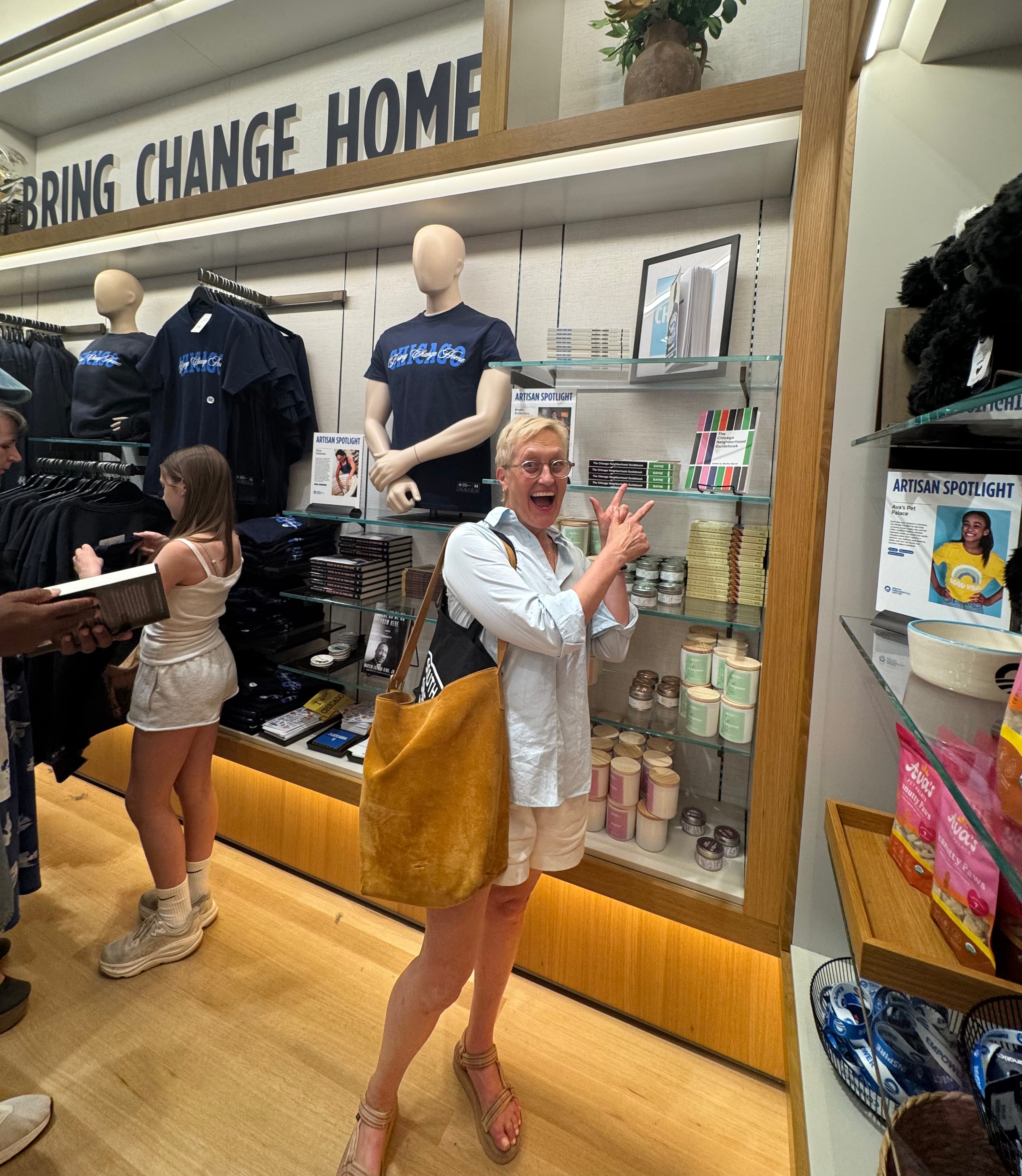
If you can’t get to the Obama Center gift shop, you can buy a copy of The Chicago Neighborhood Guidebook straight from the source at Belt Publishing. While you’re there, why not pick up a copy of its partner collection, Rust Belt Chicago: An Anthology? And, of course, I would be remiss not to remind you that the paperback edition of Nothing Compares to You: What Sinéad O’Connor Means to Us will be out August 25, and you can preorder a copy today. What better day to celebrate our freedoms of speech and of the press?
oooh I love all of this - especially that pic of you with your book in the shop. Amazing!
Your perspective amidst the funk is the best prescription for these times. This piece was really uplifting and beautifully written.